Neuro-Gen HPN: High Performance Neurofeedback
Neurofeedback (NFB) is brainwave training, otherwise known as EEG Biofeedback .
Neuro-Gen HPN relies on direct feedback to shape brainwave patterns vs other forms of NFB that rely on operant conditioning.
Spark, the aptly named book by Harvard Psychiatrist Dr. John Ratey, explains the role of Brain Derived Neurotropic Factor (BDNF).
Namely, that BDNF and related growth factors help create and maintain healthy brain function.
Physical exercise and direct brain stimulation—spark—neurogenesis and neuroplasticity, in some cases as much as 250%.
BDNF which Ratey refers to as the “miracle growth molecule” protects against cortisol.
Cortisol from chronic stress can decrease neuronal connectivity resulting in mental and health problems.
Some backstory: My interest in neurofeedback (NFB) stems from surviving a fatal auto accident with an undiagnosed traumatic brain injury (TBI) 25 years ago. The other driver, who wasn’t wearing a seat belt, ran a stop sign crossing a county highway at high speed. My vehicle was hit on the driver-side engine, which likely spared my life. Unfortunately the other driver did not survive.
My survival included more obvious physical injuries whereas my brain was ignored by conventional medicine. Serendipitously, I was living in Sarasota, FL several years later and happened to drive past MindSpa, which piqued the curiosity of my remaining undamaged neurons. I did some research and discovered the owner, Dr. George Rozelle, was immersed in brain-based treatment modalities.
Being a brain freak myself (my undergrad included brain science and rat-brain surgery), I contacted Dr. Rozelle, joined his practice, obtained a brain map, and administered NFB to myself and others using his equipment. As technology evolved, Dr. Rozelle’s practice and modalities grew and eventually included his collaboration with Fred Willis, and participation in the NFL player studies using direct NFB (vs operant conditioning).
Eventually I moved closer to Tampa with my own equipment including Neurogen-HPN, collaborated with a couple of other practices and came to a screeching halt when COVID hit. (The NFB data below is from my treatment of a workers comp client in collaboration with Dr. Joshua Shannon’s practice.) During COVID I resumed telehealth ‘talk’ therapy which renewed my resolve to offer more comprehensive treatment options. To provide a combination of remote coaching/counseling and direct physical treatment services.
https://pmc.ncbi.nlm.nih.gov/articles/PMC10836789/
Excerpts: “This study explores the effectiveness of IASIS microcurrent neurofeedback on depression, anxiety, post-traumatic stress disorder, and quality of life. Anecdotally, it has shown great promise in treating mental health and symptoms associated with other conditions … IASIS microcurrent neurofeedback, has no known side effects, is safe, and can have profound benefits for patients across the lifespan, as noted in this study.”
Neurofeedback Innovations for Concussion with Retired NFL Players 2017 Study (Excerpt):
METHOD
“Equipment: Ultra-Low Pulsed Electric Current EEG Biofeedback. The study device was the J&J I-330 C2+2-Channel EEG Amplifier, running a modified version of PhysioLab USE3 software. The device is registered with the FDA under a 510(k) exemption. This equipment has been sold under the various trade names, Clarity Direct Neurofeedback, Neurogen HPN, and Iasis Microcurrent Neurofeedback. Treatment using this equipment is commonly referred to as Direct Neurofeedback.”
Neuro-Gen HPN does not rely on a brain map or normative database against which your QEEG (brain map) is compared.
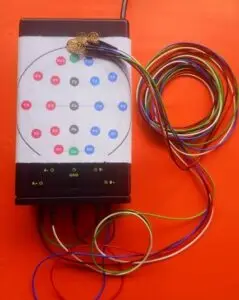
Two (2) electrodes are used to read each of two (2) channels at approximately twelve (12) site-pair locations; 5th electrode is ‘ground’ reference.
All signals can be sensed by all point locations—the closest neurons have the strongest effect on signals. The EEG-Interface amplifier averages and digitizes the EEG signals.
The HPN software interprets the signals to deliver a novel frequency microcurrent, generate graphics, interpret connectivity, and monitor progress.
Beneficial effects on the brain include resetting and stabilizing neuronal firing patterns, increasing ATP and blood flow, and promoting neuroplasticity.
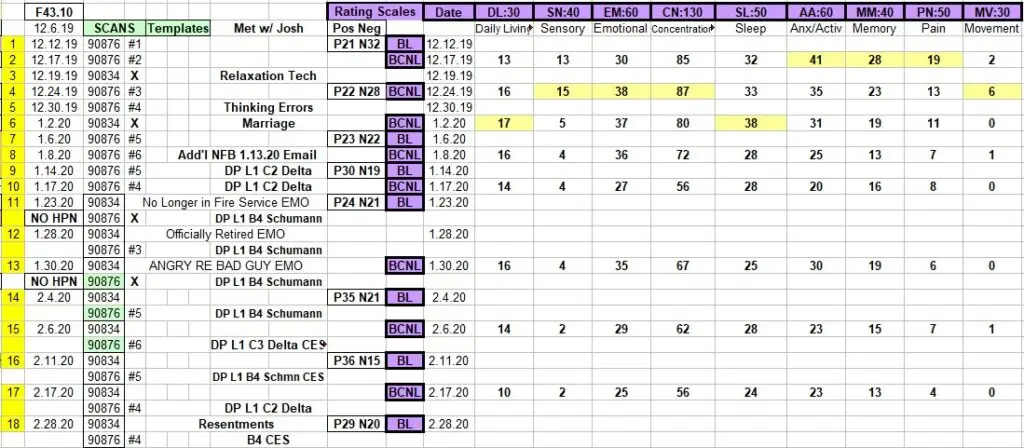
Safety and efficacy include careful monitoring of treatment effects. Client ratings are obtained prior to each session – see first responder data and results.
And, by comparison, the renowned neurosurgeon, Wilder Penfield, mapped the exposed brains of awake epileptic patients during surgery by applying electrical stimulation, which also produced the brain homunculus.
With neurofeedback, the need for medication often decreases. Since meds remain in your system, unused, you may experience side effects due to less physical reliance on them. Consult with your prescriber regarding dosage, etc.
Day of Treatment: Get a good night’s sleep and show up on time with clean dry hair. No hair product.
Expect lots of paste and gel on your hair, temples, forehead, and scalp for electrode attachment.
Abstain from alcohol during the course of treatment.
Minimize caffeine at least two hours prior to each session.
No perfume or strong scents.
Number of sessions for Maximum Benefit range from 6 to 25 depending on current level of functioning and severity of symptoms:
ADD / ADHD / Addiction / Anxiety / PTSD / Chronic Pain / Concussion / TBI / Depression / OCD
NFB treatment data of severely traumatized first responder. Sessions ended due to COVID lockdown.
Additional non-pharmaceutical treatment methods:
Biofeedback devices increase your awareness of physiological responses to stimuli (otherwise known as Life), which allows you to learn new, more adaptive responses.
Benefits include improvement in a wide range of physical and mental health conditions.
Audio-Visual Entrainment (AVE) devices deliver an audio and/or visual stimulus to which your brainwaves will synchronize to improve mental functioning and performance.
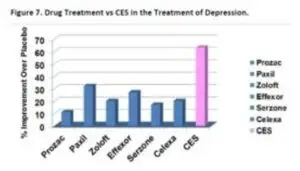
Cranial Electrical Stimulation (CES) is the application of a mild electrical current to the brain to improve neurotransmitter production.
A meta- analysis study by Gilula & Kirsch (2005) of 290 depressives showed a direct comparison of CES against various depression medications. -Dave Siever, C.E.T. 2014
Also referred to as a Cold Laser, LLLT devices emit visible light at varying wavelengths, which stimulates cellular processes.
Benefits include pain relief, tissue repair, and reduced inflammation.
Relaxation Training techniques provide more adaptive physical and mental responses to conditioned stressors.
Elicits the relaxation response, which slows breathing, relaxes muscles and reduces blood pressure.
By increasing receptivity to verbal suggestions, Clinical Hypnosis builds on the relaxation response to shift clients from habitual, unwanted patterns to new possibilities.
Lifestyle examples include good nutrition and healthy eating habits. Restful sleep. Regular physical activity. Stable and enjoyable relationships. Work-life balance. Curiosity. Constructive participation and purpose in life.
Environmental examples include economic opportunities. Access to safe and affordable housing. Freedom from harassment, intimidation, coercion, bullying, and physical or lethal aggression.